TD Reply collaborated with Bayer to develop a Digital Trend Radar, that visualizes emerging trends, associated technologies, and their maturity levels. Leveraging cutting-edge tools such as SONAR (data-driven Trend Research) and PULSE (Dashboard and Visualization), TD Reply crafted a robust platform that empowers the Client’s INNO.X program by providing actionable insights into emerging technologies relevant to its diverse divisions and corporate functions.
GOAL
The primary objective of the Digital Trend Radar project was to democratize trend knowledge throughout the organization, fostering innovation and cross-functional collaboration at Bayer with a systematic and easily accessible tool for trend identification and monitoring. Key goals included incorporating trend insights into strategic decision-making processes, prioritizing trends relevant to specific divisions, and evaluating their potential impact on existing business models.
SOLUTIONS
The Digital Trend Radar enables Bayer to incorporate environmental scanning into the Strategy Formulation, improving the prioritization of relevant trends and assessing their impact on strategic initiatives. The development of the Digital Trend Radar included various work packages:
- Stakeholder Engagement:
- Gathering stakeholder requirements and input to tailor the Digital Trend Radar to Bayer’s specific needs and objectives.
- Trend Discovery:
- Leveraging TD Reply’s extensive trend universe and employing custom trend discovery methods, over 200 trends were identified, ensuring comprehensive coverage of relevant developments.
- Trend Prioritization:
- A blend of quantitative and qualitative analyses was employed to quantify and prioritize trends. Using SONAR (our proprietary data-driven trend research solution), we analyzed millions of expert opinions, including blogs, news, patents, and scientific articles. This quantitative analysis was complemented by expert evaluations of each trend’s impact on Bayer, to select the most relevant trends for further in-depth analysis.
- Use Case Identification:
- Building on the prioritized trends, we identified and described over 250 use cases, offering actionable insights into how these trends could be operationalized within Bayer’s context.
- Trend Framework Development:
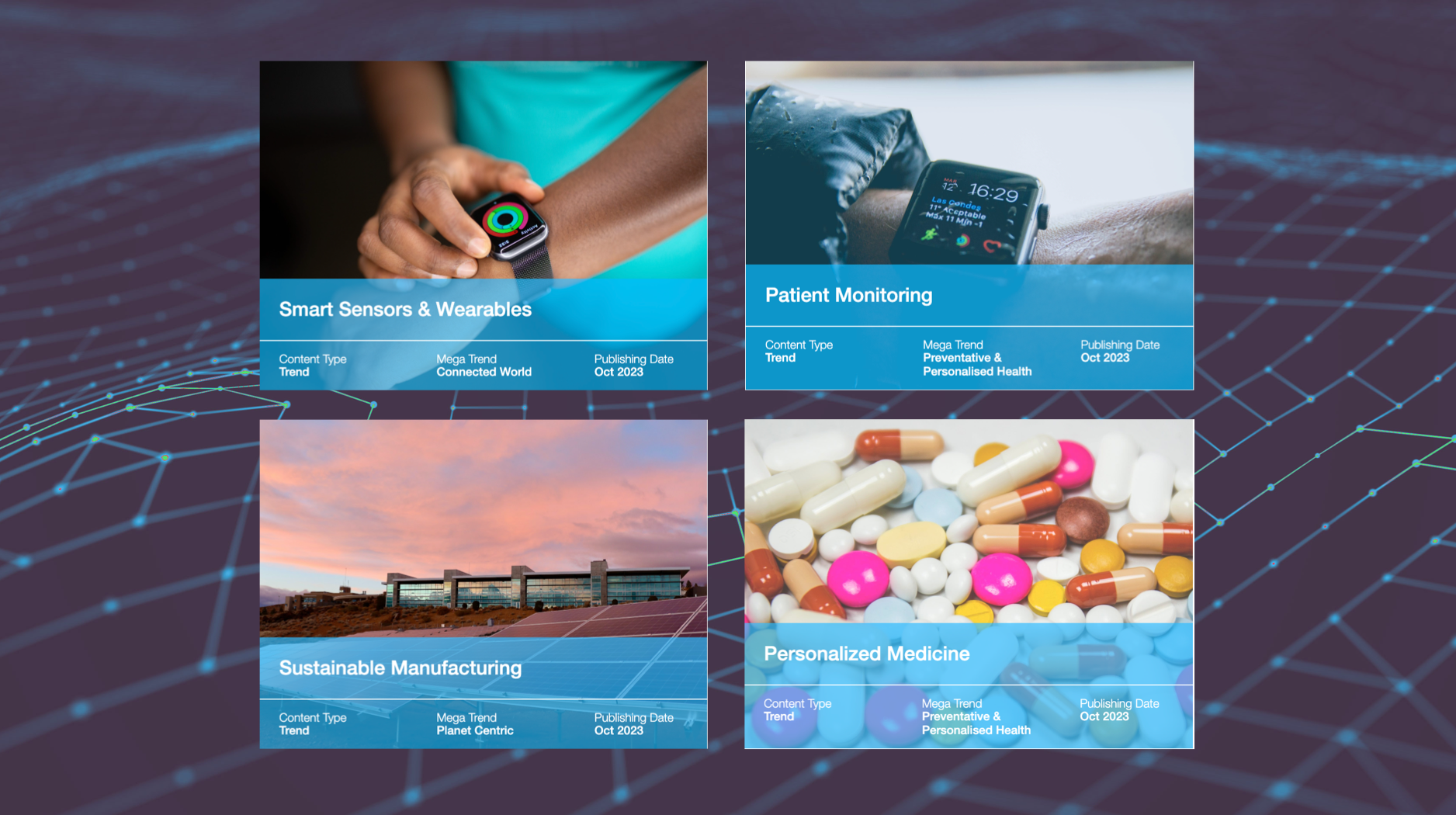
- Based on the extensive research phase, a robust and structured Trend Framework was developed, encompassing Mega Trends, Trend Areas, Trends, and Use Cases. This framework provided a comprehensive overview of the evolving landscape and served as a strategic guide for Bayer.
- Ongoing Automated Monitoring:
- To ensure the Radar remains up-to-date, an automated monitoring system was established using SONAR. This continuous monitoring allows Bayer to stay ahead of emerging trends and adapt their strategies accordingly.
- Definition of Operating Model:
- To ensure a seamless integration of the Digital Trend Radar into existing processes and workflows, we defined an efficient operating model.
- Trend Radar Set-Up:
- The development, testing, and launch phases were executed meticulously to ensure the Digital Trend Radar meets the requirements for functionality, usability, and reliability.
Through these comprehensive efforts, we delivered a state-of-the-art Digital Trend Radar. It supports strategic decision-making, providing trend insights and empowering Bayer to navigate the ever-evolving landscape of emerging technologies and trends.